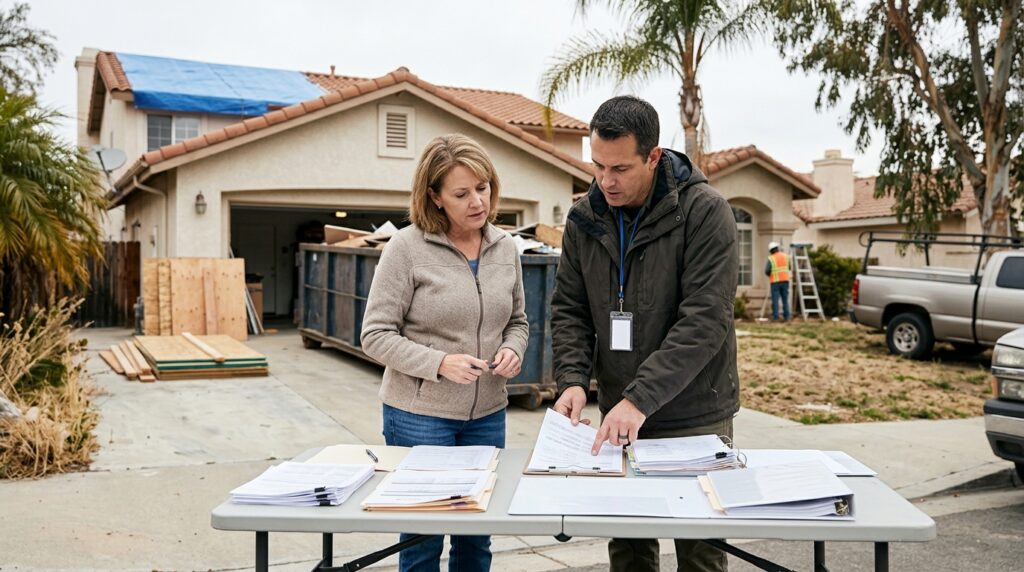
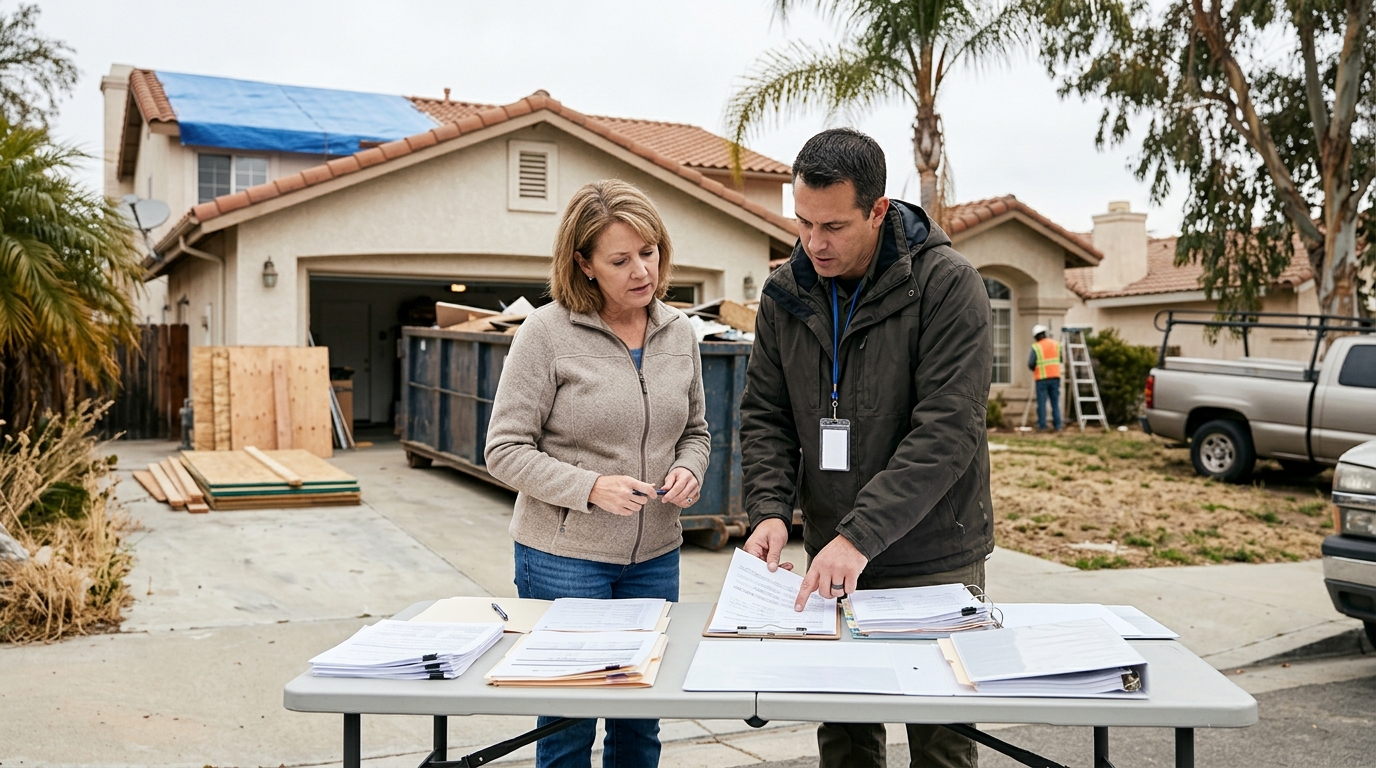
The California Disaster Recovery Reform Act 2027 introduces important changes for homeowners and renters dealing with insurance claims after major disasters. California enacted Senate Bill 876 in September 2026 to strengthen insurance consumer protections and address problems that can delay recovery after wildfires and other catastrophic events.
Disaster survivors often face difficult decisions while managing temporary housing, damaged belongings, rebuilding estimates, and insurance paperwork. Complicated claims procedures can add uncertainty during an already stressful period.
SB 876 aims to improve that process. The legislation addresses insurer preparation, claim communication, restitution, replacement-cost coverage, and enforcement.
However, the law does not take effect until January 1, 2027. Homeowners should distinguish these upcoming requirements from the rules that currently govern their existing claims.
This guide explains the major reforms and offers a practical checklist for preparing insurance documents before a disaster occurs.
What Changes Under California’s Disaster Recovery Reform Act?
California lawmakers developed SB 876 in response to concerns about disaster claim delays, inadequate insurance coverage, and inconsistent communication.
On September 28, 2026, the California Department of Insurance announced that the governor had signed the legislation.
The department describes the measure as a significant modernization of California’s disaster claims-handling framework.
The reforms cover several important areas, but they do not guarantee payment for every claimed loss. Policy terms, evidence, and applicable law will still influence individual outcomes.
Insurance companies must prepare for major disasters
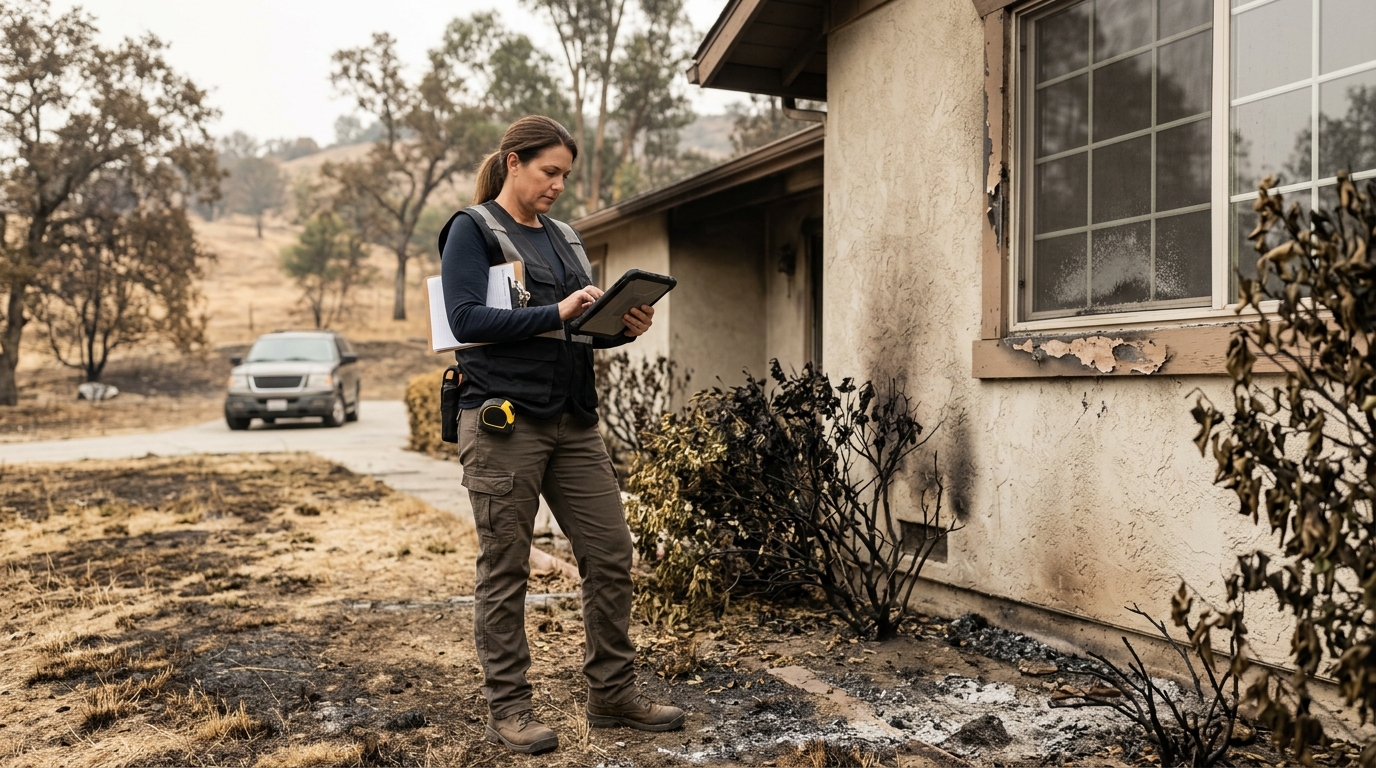
SB 876 requires insurers to develop disaster recovery plans that address claims handling and applicable timelines.
The California Department of Insurance will review those plans in advance. The requirement seeks to improve insurers’ readiness when a declared disaster produces large numbers of claims.
Insurers may need to coordinate adjusters, claims personnel, contractors, and communication systems during a major emergency.
Advance planning can help reduce avoidable confusion when many policyholders seek assistance simultaneously.
Why disaster recovery plans matter to policyholders
After a wildfire or another declared disaster, an insurance company may receive thousands of claims within a short period.
Without adequate preparation, claimants may experience repeated requests for documents, long waits for inspections, or difficulty reaching the correct representative.
A disaster recovery plan gives regulators a way to evaluate how an insurer intends to manage these responsibilities.
However, submitting a plan does not prove that the company will handle every claim correctly. The insurer must still follow applicable law and carry out its obligations.
Policyholders should keep written records of important communications throughout the process.
How the law addresses changing insurance adjusters
Disaster claims sometimes involve several adjusters over an extended period. Each personnel change may leave homeowners uncertain about the status of their claim.
SB 876 addresses this problem by requiring an insurer to send a status report within 15 days whenever it assigns a new adjuster.
The purpose is to improve continuity and reduce the burden on survivors who otherwise might need to explain the same damage repeatedly.
Homeowners should maintain a list of their assigned adjusters and save each written status update.
If a new adjuster requests documents that the company already received, refer to the earlier submission records.
Stronger penalties and restitution for unfair claim practices
Another important part of SB 876 concerns accountability.
According to the California Department of Insurance, the law doubles penalties during a declared emergency for violations of fair claims practices and settlement requirements.
It also requires insurers to provide restitution directly to policyholders when they engage in unfair claims settlement practices under the applicable provisions.
These changes aim to discourage unreasonable delays and other improper claim-handling conduct.
However, a delayed claim does not automatically establish a statutory violation. The reasons for the delay and the applicable requirements still matter.
What homeowners should document when a claim stalls
Start with a clear timeline of your insurance claim. Record the date you reported the damage, the inspections completed, and the documents you submitted.
Keep copies of emails, letters, estimates, payment explanations, and requests for additional information.
When an insurer gives a decision verbally, ask for written confirmation.
If the company changes adjusters, record the name and date of the reassignment.
Keep notes about unresolved questions, but separate confirmed facts from assumptions about the insurer’s motives.
For an existing discussion of property damage documentation, read our California Smoke Damage Recovery Act guide.
How Homeowners and Renters Can Prepare for SB 876 in 2027
Insurance reforms can help consumers, but policyholders still benefit from understanding their own coverage before an emergency.
A homeowner may believe the dwelling limit reflects the cost of rebuilding. Yet local construction prices, labor shortages, and building requirements can change that cost.
Renters face different concerns because their policies generally focus on belongings, liability, and covered additional living expenses rather than rebuilding the landlord’s structure.
Both groups should review policy terms and identify possible gaps.
Review rebuilding coverage and additional living expenses
SB 876 introduces requirements involving offers of extended replacement-cost coverage and additional living expenses coverage when insurers write policies.
The legislation also addresses updated replacement-cost estimates for new business and renewals.
These protections respond to concerns that some households discover inadequate coverage only after a major loss.
Still, consumers should not assume that every policy automatically provides unlimited rebuilding funds. Coverage limits, conditions, and the final applicable requirements remain important.
Understand rebuilding costs and code upgrades
The cost of rebuilding a damaged home can differ from its market value.
Market value reflects factors such as location and demand. Reconstruction costs depend on materials, labor, building design, and other construction expenses.
SB 876 also addresses building-code upgrade coverage by tying the relevant protection to requirements at the time of rebuilding rather than only those at the time of loss.
This can matter when building standards change before reconstruction begins.
Before renewal, ask your insurer how it estimates replacement costs and whether the proposed coverage meets your needs.
Review your current policy before January 2027
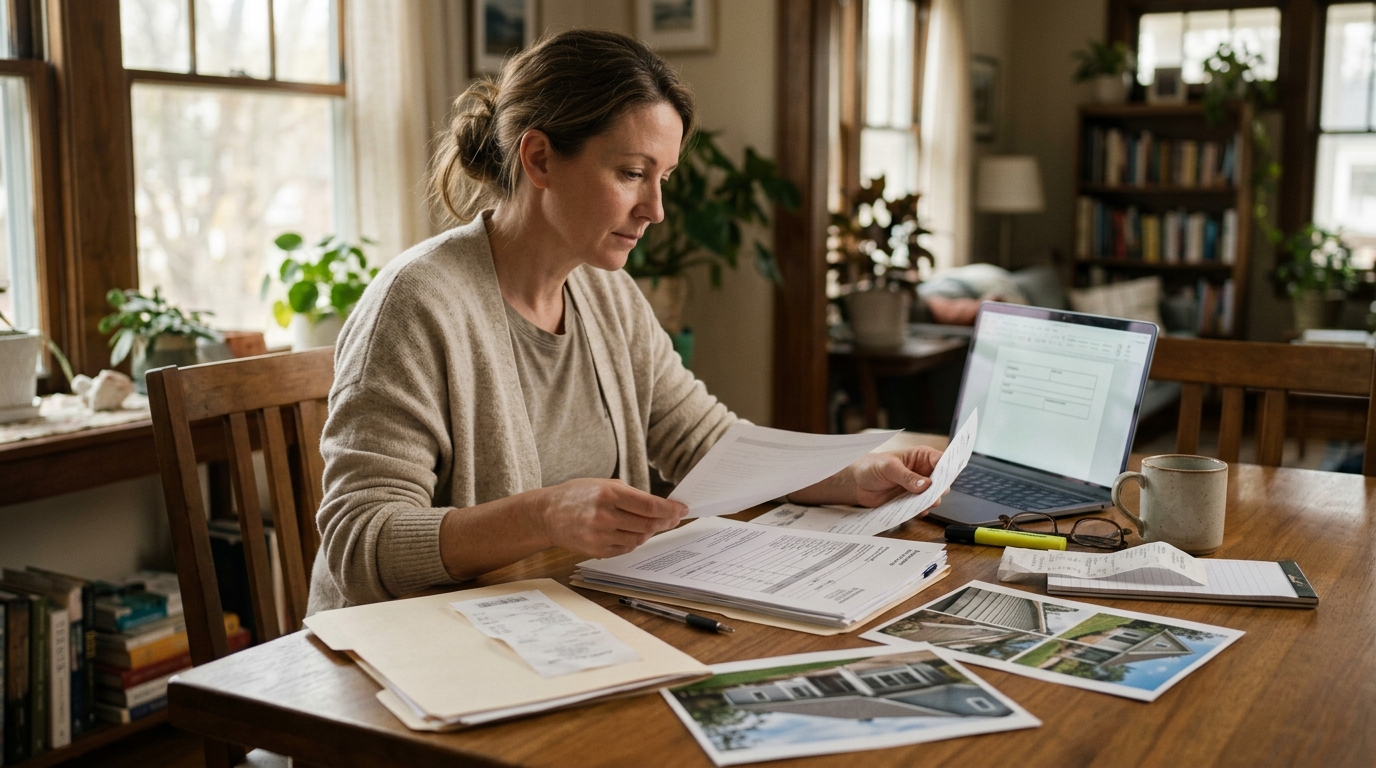
Locate the declarations page and read the dwelling, personal property, loss-of-use, and deductible provisions.
Ask whether extended replacement-cost coverage is available and how any coverage percentage works.
Review additional living expenses coverage, particularly if temporary housing in your area is expensive.
Keep copies of quotes, endorsements, and policy changes. A short comparison sheet can help you identify differences between options.
If you rent, confirm which belongings and temporary expenses your renters insurance covers.
Our California rental law changes guide provides related information about housing responsibilities and documentation.
Create a disaster insurance document folder
Prepare a secure folder containing your policy, endorsements, insurer contact details, and important property records.
Photograph rooms, valuable belongings, and major improvements to establish a reference for future claims.
Save receipts for expensive purchases and home upgrades when available.
Store digital copies securely outside the home. Protect financial and personal information with suitable access controls.
For additional official guidance, review the California Department of Insurance announcement about SB 876.
Know what to do immediately after a disaster
Prioritize personal safety and follow evacuation instructions from authorities.
Do not enter a damaged building until responsible officials determine that access is safe.
When conditions permit, notify your insurer promptly and ask how to document the loss.
Take photographs before cleanup when safe and practical. Keep receipts for emergency lodging, transportation, and other necessary expenses.
Ask whether the insurer offers advance payments or other assistance under your policy and applicable law.
Avoid signing a final settlement or release without understanding the terms.
Understand the difference between current and future protections
California enacted SB 876 in September 2026, but its effective date is January 1, 2027.
That distinction is especially important for homeowners handling claims during October, November, or December 2026.
Existing laws and regulations may already provide protections, but consumers should not assume SB 876’s future requirements apply retroactively.
The law’s treatment of a particular claim may depend on timing, the type of policy, and its specific provisions.
When a dispute involves a deadline or significant financial loss, obtain guidance based on the facts of the individual claim.
Keep communication with the insurer organized
Save every important written communication in one location.
When you speak with an adjuster, record the date, person’s name, and main points discussed.
Confirm deadlines and requests for documents in writing.
Respond accurately to reasonable requests, but ask for clarification when a requirement seems unclear.
If multiple representatives give conflicting instructions, explain the discrepancy and request a written response.
An organized record can make it easier to identify missing information or repeated requests.
Ask questions about payments and coverage decisions
Insurance payments may arrive at different stages of a claim. Some funds address emergency expenses, while other payments concern structural repairs or personal property.
Ask your insurer what each payment covers and whether accepting it affects additional benefits.
Review estimates carefully and identify items that appear missing.
When contractors provide repair proposals, request itemized descriptions whenever possible.
Do not assume that an initial estimate always reflects every necessary repair.
Likewise, avoid representing damage inaccurately or submitting unsupported expenses.
Know where to raise insurance concerns
The California Department of Insurance provides information and a consumer complaint process.
Policyholders can contact the department when they have questions about insurer conduct or believe their claim has received improper treatment.
The department may review complaints within its regulatory authority.
However, filing a complaint does not automatically establish liability or guarantee the requested payment.
Some disputes may require additional technical evaluation, appraisal procedures, or legal advice.
For broader website resources, explore the California legal insights archive.
Why the new law matters beyond wildfires
Although wildfire survivors helped bring attention to these reforms, SB 876 addresses insurance recovery following declared disasters more broadly.
Flooding, severe storms, and other catastrophic events can also leave households dealing with damaged property and complicated claims.
The exact protections depend on the legislation and the circumstances of the event.
Preparedness should therefore include both physical safety measures and financial documentation.
Families may also need evacuation plans, emergency supplies, and secure access to important records.
Prepare without assuming every claim will qualify
State insurance rules operate alongside policy language and factual coverage questions.
A law that improves claims handling does not necessarily expand coverage to losses a policy excludes.
Likewise, an insurer’s obligation to offer certain coverage differs from a policyholder actually purchasing that protection.
Review the details with a licensed insurance professional when comparing policies.
When a claim dispute becomes serious, seek qualified legal advice about available options and deadlines.
What to remember as January 2027 approaches
The California Disaster Recovery Reform Act 2027 aims to improve accountability, communication, and insurance preparedness after declared disasters.
Its major reforms include disaster recovery planning, stronger penalties, restitution provisions, and new requirements involving coverage offers and replacement-cost estimates.
For homeowners and renters, preparation remains essential.
Review your policy, document valuable property, organize important records, and confirm which protections apply to your situation.
These steps can make insurance questions easier to manage before or after an emergency.
Legal disclaimer: This article provides general educational information, not legal or insurance advice. SB 876 takes effect January 1, 2027. Its application to individual policies and claims depends on the law, policy terms, and relevant circumstances.