California rental law changed in several important ways in 2026. New rules affect basic appliances, habitability, eviction defenses, and the records that landlords and tenants should keep.
One major change involves stoves and refrigerators. For many leases entered into, amended, or extended on or after January 1, 2026, California now treats working cooking and food-storage appliances as part of the state’s habitability standards.
Another law provides temporary protection for some tenants who cannot pay rent because their Social Security benefits were interrupted by federal action or inaction.
These rules do not apply in exactly the same way to every rental property or every tenant. Lease dates, property type, the reason for nonpayment, and other facts can change the analysis.
Therefore, landlords should review their leases and maintenance procedures. Tenants should also understand what the new rules do and what they do not guarantee.
This article explains key California rental law changes for 2026 in plain language. It provides general information and does not replace legal advice about a specific landlord-tenant dispute.
Major California Rental Law Changes Taking Effect in 2026
California already requires landlords to provide rental housing that meets basic habitability standards. Those standards cover issues such as weather protection, plumbing, heating, electrical systems, sanitation, and structural safety.
In 2026, the state added new requirements involving kitchen appliances for many residential leases. California also created a targeted protection for renters affected by certain interruptions in Social Security payments.
Landlords should understand the details before changing a lease or responding to a maintenance request. Tenants should avoid assuming that every appliance issue or missed rent payment automatically creates the same legal result.
Working Stoves and Refrigerators Are Now Required for Many Leases
Assembly Bill 628 changed California’s habitability rules. The law applies to qualifying leases entered into, amended, or extended on or after January 1, 2026.
Under the new rules, covered rental units generally need a working stove. The stove must safely generate heat for cooking.
A covered unit also generally needs a working refrigerator. The refrigerator must safely store food.
This change is important because California law previously listed many habitability requirements without making these two appliances a general statewide requirement in the same way.
A landlord should therefore check the condition of both appliances before a new covered tenancy begins. Existing landlords should also pay attention when they extend or amend a lease.
Which Rental Agreements Are Covered?

The appliance requirements do not simply apply to every rental agreement regardless of date. The law specifically applies to leases entered into, amended, or extended on or after January 1, 2026.
That means the timing of the lease can matter. A landlord and tenant should keep a copy of the signed agreement and any later amendments or extensions.
The law also contains exceptions for certain housing arrangements. Examples include some permanent supportive housing, single-room occupancy units, residential hotels, and housing facilities that provide shared or communal kitchen spaces.
In addition, a landlord and tenant may agree at the start of the lease that the tenant will provide and maintain their own refrigerator. However, the agreement must be voluntary and comply with the law.
A landlord cannot simply make bringing a refrigerator a condition of obtaining the tenancy.
If a tenant provides their own refrigerator under a valid agreement, the landlord generally does not become responsible for maintaining that tenant-owned appliance.
Because the details matter, both parties should put any appliance arrangement in writing. Clear records can prevent later disputes about who supplied the appliance and who must maintain it.
Landlords Should Address Broken or Recalled Appliances
A landlord should respond promptly when a covered stove or refrigerator stops working. The habitability rules focus on whether the appliance remains in good working order and can perform its basic function safely.
Recall notices also deserve attention. Under AB 628, a landlord must repair or replace a covered stove or refrigerator that becomes subject to a manufacturer or public-entity recall within 30 days after receiving notice of that recall.
Tenants should report appliance problems in writing when possible. A written notice creates a clear record of the date and the condition reported.
Photos or videos can also help document an obvious problem. For example, a tenant may photograph a refrigerator that no longer cools or a damaged stove that cannot operate safely.
Landlords should keep repair invoices, service records, replacement receipts, and communications with the tenant.
Both sides benefit from a simple timeline. It can show when the problem appeared, when notice was given, and when repairs occurred.
Visitors can review additional general information through the site’s Legal Resources section. The Practice Areas page also provides an overview of available legal services.
Social Security Interruptions Can Affect Certain Eviction Cases
California also enacted the Social Security Tenant Protection Act of 2025. The law became relevant for renters in 2026 and remains temporary.
The Act addresses a narrow situation. It applies when federal action or inaction interrupts Social Security benefits and that loss of income prevents a tenant from paying rent.
In a qualifying nonpayment eviction case, a tenant may raise the Social Security hardship as an affirmative defense.
This protection does not erase unpaid rent. It also does not create a general right to stop paying rent whenever a household experiences financial difficulty.
The tenant must connect the inability to pay with the qualifying interruption in Social Security benefits.
How the Social Security Hardship Defense Works
A tenant who relies on this protection must provide evidence to the court. The tenant generally needs to show that Social Security payments normally received by the household were terminated, delayed, or reduced because of federal action or inaction.
The problem also must occur through no fault of the tenant. In addition, the interruption must have prevented the household from paying the rent at issue.
If the tenant establishes the required hardship, the law can affect the unlawful detainer proceeding.
However, the rent does not disappear. Once benefits return, the tenant must address the unpaid amount as required by the law.
That may involve paying the past-due rent or reaching an agreed payment arrangement with the landlord, depending on the applicable circumstances.
The protection is also temporary. The California Department of Real Estate states that the law sunsets on January 20, 2029.
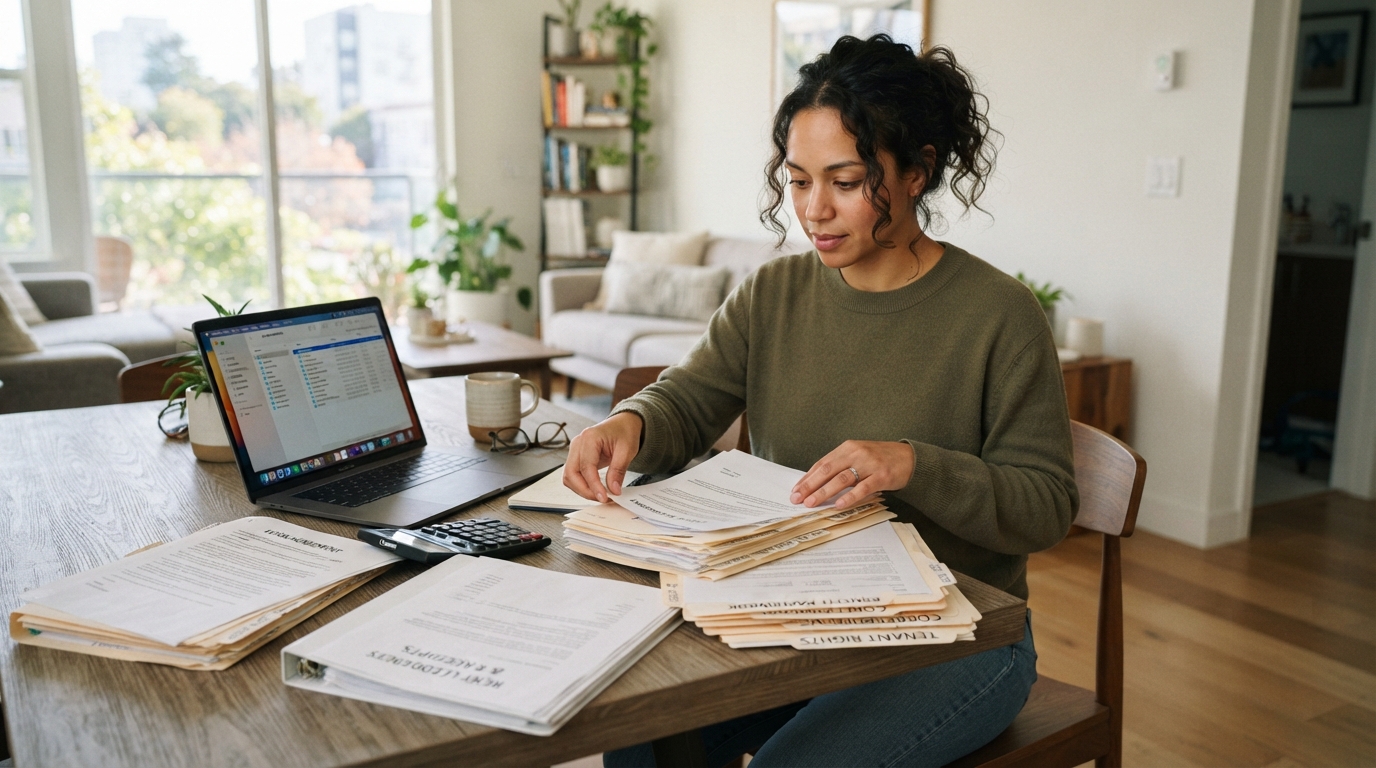
Tenants should therefore keep Social Security notices, bank records, rent notices, and landlord communications. These documents may help establish when the interruption occurred and how it affected household income.
Landlords should also keep accurate rent ledgers and copies of notices. If a tenant raises the defense, the dates and amounts may become important.
Review the California Department of Real Estate’s official summary of 2026 real estate law changes.
What California Landlords and Tenants Should Do in 2026
The new laws make documentation more important for both sides of a rental relationship.
Landlords should review lease forms before using them in 2026. They should also confirm whether a new agreement, amendment, or extension triggers the stove and refrigerator requirements.
Property managers should understand the new rules as well. A maintenance employee or leasing agent who follows an outdated policy could create unnecessary problems.
Tenants should read new leases carefully. Check whether the unit includes a stove and refrigerator and note who owns each appliance.
If the tenant will provide a refrigerator, the agreement should clearly reflect that choice. The tenant should also understand that maintenance responsibility may remain with them.
Good Records Can Prevent Small Problems From Becoming Major Disputes
Many landlord-tenant disputes start with a basic communication problem. One side believes notice was given, while the other side says it never received it.
Written communication can help avoid that issue.
A tenant reporting a broken appliance should describe the problem clearly. Include the date and request a response.
A landlord who schedules a repair should confirm the appointment. After the work is complete, keep the invoice or service record.
Rent records deserve the same care. Landlords should maintain clear ledgers showing payments, credits, and balances.
Tenants should keep receipts, electronic payment confirmations, and bank records. Never assume that an online payment system will preserve records forever.
2026 Rental Law Checklist
Landlords can use these practical steps:
- Review all lease forms used in 2026.
- Identify agreements entered into, amended, or extended after January 1.
- Confirm whether covered units have working stoves and refrigerators.
- Document any tenant-provided refrigerator agreement.
- Create a process for appliance repair requests.
- Track manufacturer and public safety recalls.
- Keep maintenance invoices and replacement records.
- Maintain accurate rent ledgers.
- Train property managers on the new requirements.
- Review changes to state and local rental laws regularly.
Tenants can take several steps too:
- Keep a complete copy of the lease.
- Save amendments and lease extensions.
- Report serious appliance problems in writing.
- Take photographs when they help document a problem.
- Keep copies of repair requests and responses.
- Save rent receipts and payment confirmations.
- Preserve Social Security notices if benefits are interrupted.
- Keep court papers and eviction notices together.
- Do not ignore deadlines listed in legal notices.
- Seek case-specific guidance when a dispute becomes serious.
Local rules may provide additional protections. Cities and counties can have rent stabilization, eviction, relocation, or housing requirements that differ from statewide rules.
For that reason, a tenant or landlord should not rely only on a general statewide article when handling a specific dispute.
The site’s California Court Guide provides general information about the court system. Visitors can also use the Legal Insights archive to follow future California law updates.
California’s 2026 rental law changes add meaningful new rules, but they are not unlimited. The appliance requirement depends in part on the lease date and property type. The Social Security protection applies only in specific circumstances.
For landlords, the best approach is to update lease procedures, maintenance systems, and records. Clear policies can prevent avoidable disputes.
For tenants, the most important steps are to read the lease, document problems, keep payment records, and respond promptly to legal notices.
California housing law continues to change. Both landlords and renters should therefore confirm current state and local requirements when a significant issue arises.